
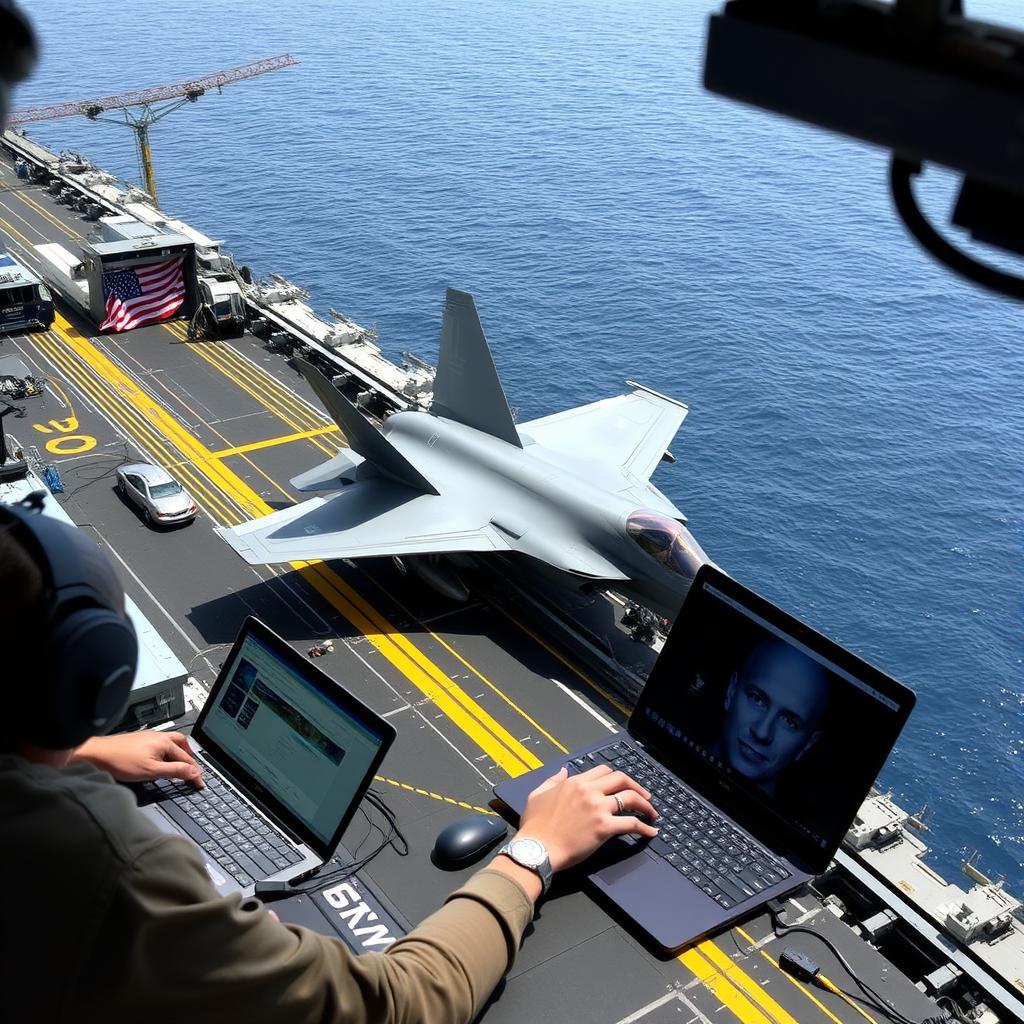
An aircraft carrier in the U.S. Navy tested “vastly increased” levels of internet connectivity, reports the defense-news website TWZ, calling it “a game-changer for what a ship and its sailors can do while at sea.” The F-35 Joint Strike Fighters assigned to the carrier exemplify what additional shipboard bandwidth—provided by commercial providers like Starlink and OneWeb—can mean at the tactical level. Jets from the embarked Marine Fighter Attack Squadron 314 received critical mission data file updates in record time last fall due to the carrier’s internet innovations, a capability that is set to expand across the fleet. “This file offers intelligence updates and design enhancements that enable pilots to identify and counter threats in specific operational environments,” the Navy stated in an October release announcing the achievement. “The update incorporated more than 100 intelligence changes and multiple design improvements, significantly enhancing the aircraft’s survivability and lethality.” [Capt. Kevin White, then the Lincoln’s combat systems officer] noted how the F-35 “eats and breathes data daily,” and it must be shared with commands ashore. The connectivity innovations he has pioneered will facilitate such data transfers, which will only grow more complex over time. “If you can’t get the data onboard, you’re probably going to be at a loss,” White said. “So large file transfer capability increases combat readiness.” When the system was operational, it provided not only mission benefits but also advantages to the hardworking Lincoln crew, which was at sea for 107 days at one point without any port calls. [Capt. Pete “Repete” Riebe told WEST conference attendees] that the average age of an embarked Lincoln sailor was 20.8, and Riebe emphasized that to attract young people into service, the Navy needs to recognize their inherent connection to their devices. “The next generation of sailors grew up with a cell phone in their hand, and they are uncomfortable without it,” Riebe remarked. “I don’t necessarily like that, but that’s reality, and if we want to compete for the best individuals coming into the Navy, we need to offer them bandwidth at sea.” Improved connectivity also assisted with the ship’s administrative functions, Riebe noted, making medical, dental, and other tasks significantly easier than in the past. A sailor who can FaceTime with his family back home carries less non-Navy stress as they focus on the life-or-death duties at hand, White explained. This enhanced bandwidth allowed 38 sailors to witness the birth of their children, while others were able to watch their kids’ sporting events, White added. Several crew members pursued doctorate and master’s degrees while deployed due to better internet access, while others were able to address personal or legal issues they had left behind at home. One officer managed to commission his wife remotely from the ship. On the operational side, from “the most desolate waters,” Lincoln utilized its bandwidth to connect with a command in Norfolk, which conducted the ship’s annual cybersecurity scans “from halfway around the world,” White stated. Taxpayer dollars can also be saved if a ship isn’t paying for WiFi access while in port, White noted, and the crew was able to start getting to know their Italian allies online before an exercise, enhancing the personal aspects of such partnerships. More bandwidth also translates to increased onboard training, meaning some sailors do not have to leave to attend school, and sailors were able to receive answers to maintenance questions from ashore commands more quickly. “Just by having more reliable access to support resources, we definitely become more effective at maintenance,” White said. Every day, the aircraft carrier averaged four to eight terabytes of transferred data, according to the article (with a team of two full-time system administrators managing 7,000 IP addresses), and ultimately saw 780 terabytes of data transferred over five-and-a-half months. The article notes that this initiative is part of the Navy’s larger “Sailor Edge Afloat and Ashore” (SEA2) program to provide all its warships with high-bandwidth connectivity around the world. The program “involves moving some communications aspects away from proprietary Defense Department satellites while relying on commercial satellite constellations and even cellular providers to keep ships more connected at sea for both personal and tactical uses.” Thanks to longtime Slashdot reader SonicSpike for sharing the article.

 Tech & Breaking News